


Pitstop 005 - The "nearly man" Alexander Zverev and the game he's playing off the court.
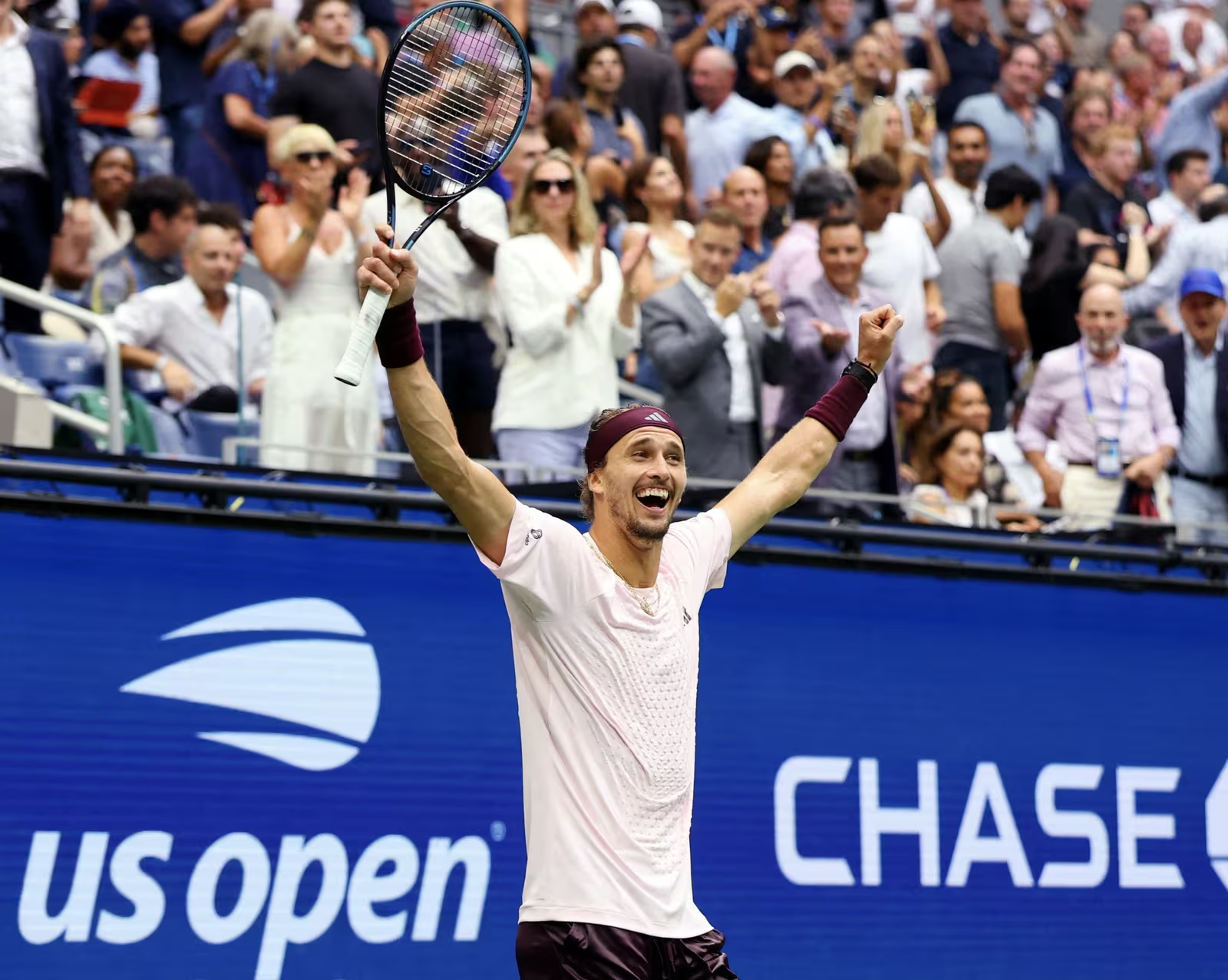
A few weeks ago Alexander Zverev won the US Open after a heated three and a half hour battle against Ben Shelton. With almost 24,000 people mostly cheering against him, he stayed cool as a cucumber and closed it out
6-3, 7-6, 5-7, 6-2.
For most of his career though, Sascha, as his friends call him, was known as “the nearly man.” The one who gets to the final but never lifts the trophy. But here's the thing. While the world watched him chase titles for years and kept writing him off as the best player to never win a major, he's quietly been playing a completely different game off the court.
One that might end up being even more successful than his tennis career.
To make sense of it, let's start at the beginning.
At four years old, Sascha was diagnosed with Type 1 diabetes. The doctors were clear that life and sport would be “very, very limited” for him, but his mother had other plans. She raised him to see the illness as part of who he was, not as a limit on who he could become.
For a long time, Sascha didn't want anyone to know about it. Kids at school made fun of him and of the devices he had to carry around to measure his blood sugar. And once he started playing professionally, he was so worried opponents would see his illness as a weakness that he kept it to himself.
His results, on the other hand, showed no signs of weakness at all. He won Olympic gold in Tokyo, collected 25 titles on tour and climbed steadily up the rankings. On paper, he looked unstoppable. But whenever it came to the majors, he always seemed to fall short.
In 2020 he was two points away from winning the US Open.
In 2024 he was a set up against Alcaraz in the French Open final and lost again.
A year later Sinner beat him in straight sets in Melbourne.
Fortunately, this season things finally started clicking. He won Roland Garros and became the first German man to win a Grand Slam since Boris Becker in 1996. By then he had won 125 Grand Slam matches without a title, more than anyone in the Open Era. A month later he lost the Wimbledon final to Sinner and you could almost hear the old story creeping back in. Instead, he doubled down in New York and became only the second German man ever to win the US Open.
Impressive on its own. But what he's been building off the court might end up being the even bigger win…
In 2020, Sascha and his brother Mischa co-founded Tie-Break Ventures together with their investor friend Shanka Jayasinha. The fund backs early-stage companies in climate, energy and health, with the mission of making the world a better place for future generations. One of their portfolio companies, for example, builds software that tracks plastic waste from the moment it's collected until it's recycled. Another is Allied Racing, a motorsport company with its own race team, a driver academy and a classic car restoration business, which ties right back to Sascha's love for cars.
The cameras might only ever catch the tennis, but off the court Sascha is building things that are made to last. Because sooner or later every athlete's body slows down, while a good business, or a beautifully restored classic car, only gets better with time.
My key takeaways from Sascha's story
Make your weakness your strength
In 2022, Sascha went public with his diabetes diagnosis and launched the Alexander Zverev Foundation, which gets insulin and medical supplies to kids who can't afford them. These days, he doesn't hide it at all. This summer he checked his blood sugar and injected insulin into his thigh during the Wimbledon final in front of millions of spectators.
A lot of successful athletes show the result but edit out everything that got them there. Whether it's an injury, a bad season or any other setback, most of them try to hide their flaws. But the truth is, people don't care that much about results. They care about the person behind them, and a good story will always stay with people longer than any statistic or trophy ever could. A story without struggle is just boring. More often than not, the part you're most tempted to hide is exactly the part that makes people care. And that's what makes it your biggest differentiator and your greatest strength.
Build what matters to you
Sascha was just 23 and right in the middle of his career when he started Tie-Break Ventures. What I love about this is how deliberate it is. He didn't wait for retirement to start thinking about what's next. Even with a gazillion other things going on, he still committed to something bigger than himself. He's building the things he genuinely cares about, with the people he genuinely cares about.
You don't need your own fund or Grand Slam trophies to do the same. But it sure helps to ask yourself where you see yourself in the future and what you'd wish you had started doing sooner.
One thing I'm forever grateful I started early is building my investment portfolio. I didn’t know anything about it at the time, so I was looking for something that would automate the process and help me build a well diversified portfolio without spending tons of time on research and worrying about whether I was buying the right thing or not.
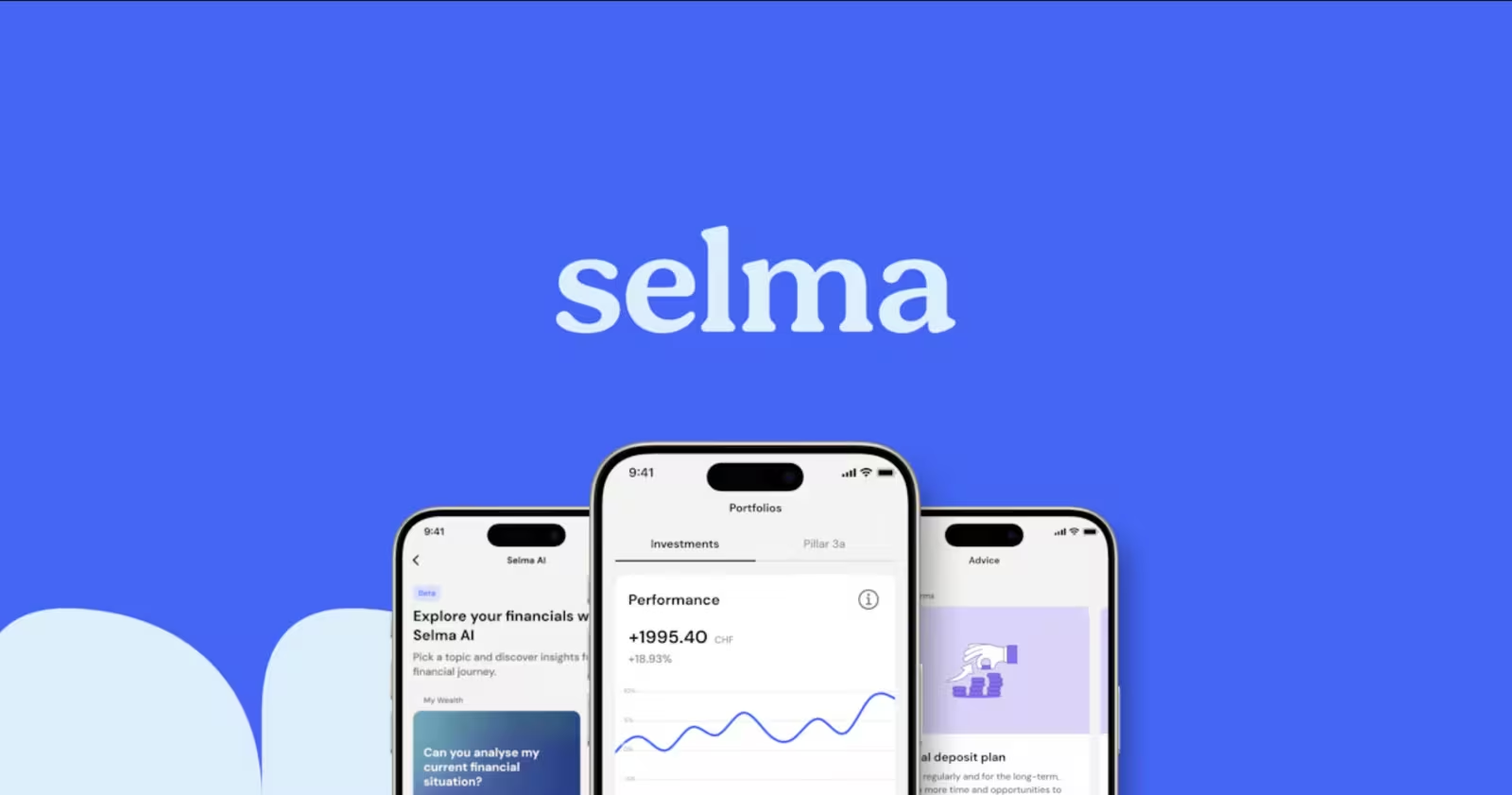
That's why I started using Selma and their AI investing platform. I love it so much that I invested in the company itself. Now a big part of my portfolio now runs through it.
Quick heads up. Selma is only available if you live in Switzerland and you're 18 or older.
And since I'm invested in them, I'm not exactly neutral here, so do your own research. This isn't financial advice, and your capital is always at risk when you invest.
If you want to sign up and benefit from a CHF 34 welcome bonus, use the code 09c5f076b and sign up here.
Okay, that's it for today, take care.
Jeremy
.svg)
